Photosynthesis: how plants make food out of light and air
When we say a tree "grew out of the ground," we're wrong. Most of the wood came from the air. This fact surprised scientists when it was first demonstrated by experiment: a weighed sapling grew for years, while the weight of the soil in its pot barely changed.
Green leaves contain a pigment called chlorophyll. It captures sunlight and uses that energy to combine carbon dioxide from the air with water the roots pull from the soil. What comes out is sugar and oxygen.
Sugars are both fuel and building material. From them the plant assembles cellulose for its stems, starch for storage and all sorts of compounds for its fruit. The oxygen goes into the air as a by-product, and that's what we breathe.
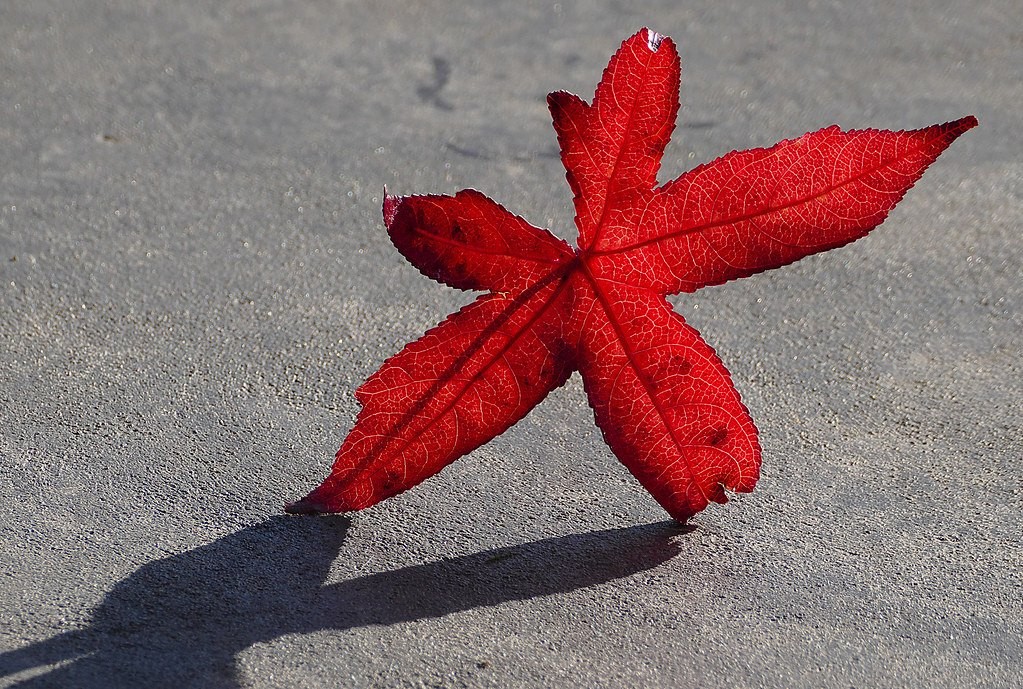
A leaf is green because chlorophyll absorbs red and blue light and reflects green. In autumn the green pigment breaks down, revealing the yellows and oranges that were in the leaf all along.
In other words, plants lock the sun's energy into the food chain. Everything we eat was, directly or indirectly, once light caught by a leaf.